
5 min read · Updated 2026-11-05
What is a freight forwarder? Role, cost and how to choose
A freight forwarder arranges the transport of your goods from the supplier's door to yours. They book space with the carrier, prepare much of the paperwork and coordinate the journey. Most importers need one, and a good one becomes one of the most valuable relationships in an import business.
Quick answer
- A freight forwarder (called a transitaire in Cameroon) books your shipment, handles transport documents and coordinates with the carrier and the port. They are not the same as the carrier or the customs broker, though one company often does both jobs.
- Compare quotes line by line, not by the bottom number, because extra charges are often billed later.
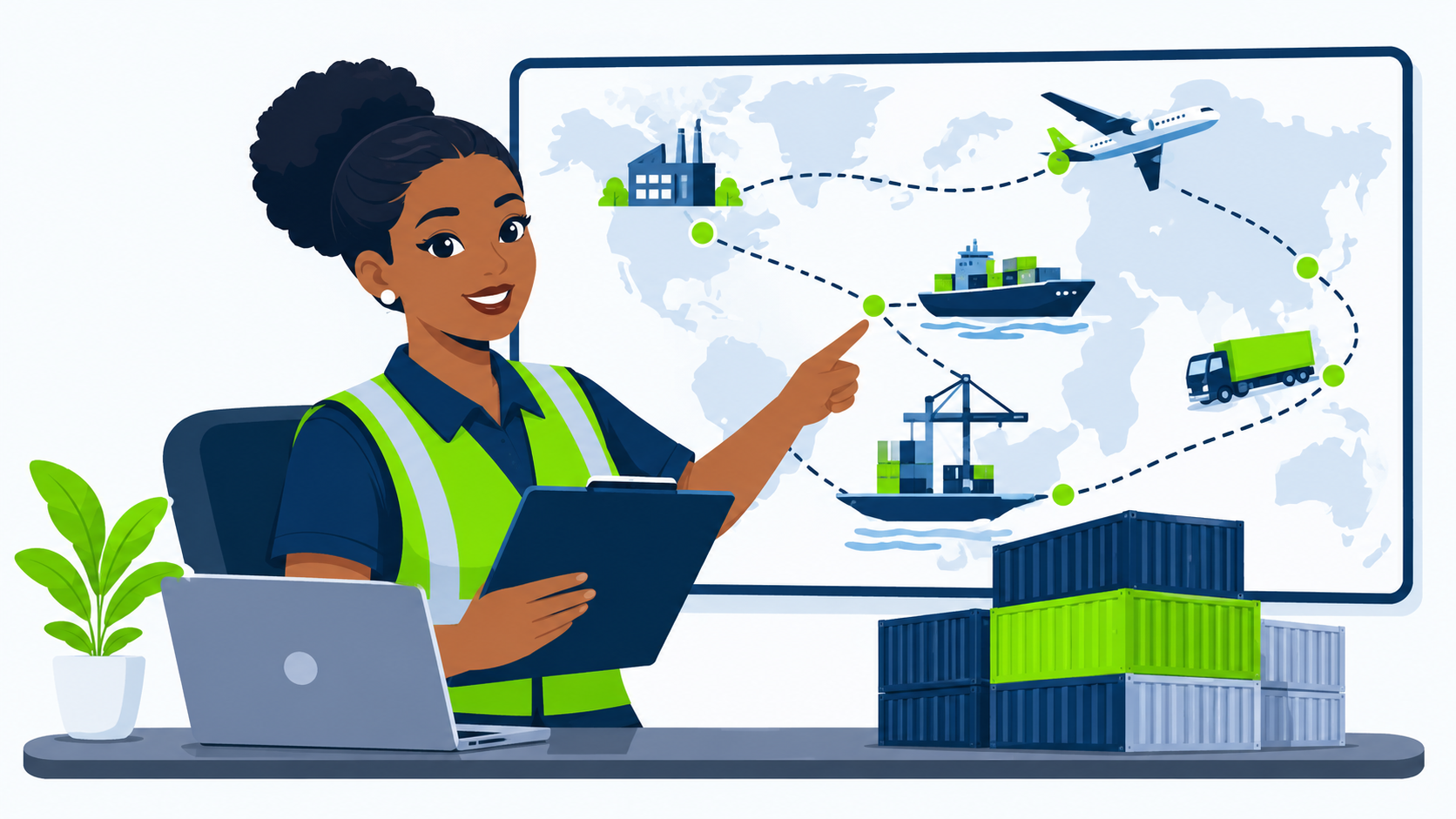
Who is who in a shipment
| Role | What they do |
|---|---|
| Freight forwarder | Arranges booking, documents and coordination of the whole journey. |
| Carrier | The shipping line, airline or trucking company that physically moves the cargo. |
| Customs broker (clearing agent) | Licensed to file your customs declaration and manage clearance. |
| Supplier | Prepares the goods and the export documents. |
When a shipment is late, it is usually a carrier or forwarder issue. When it is refused entry, it is usually a compliance issue that sits with you and your broker. Knowing who is responsible tells you who to call.
What a freight forwarder does for you
- Quotes and books the freight, by sea or by air.
- Consolidates your cargo with others when it makes sense, to lower the cost.
- Prepares and checks the transport documents.
- Tracks the shipment and keeps you informed.
- Coordinates with the port or airport, and often with customs clearance.
In Cameroon the market has largely consolidated around companies that hold both a freight-forwarding role and a customs-broker licence, so one company can book your freight and clear it on arrival. Ask any company you are considering which licences it personally holds.
How to choose and compare
- 1
Ask for itemised quotes
Compare line by line. Forwarders differ in which charges are included upfront and which arrive later as additional fees once the shipment is moving.
- 2
Check their experience
Ask about your product category, your destination port and their partner network there.
- 3
Ask how they handle problems
Delays and damage happen. A professional forwarder has a clear, honest answer, not a vague reassurance.
- 4
Get it in writing
Confirm the fee structure and the delivery terms before your first booking.
Frequently asked questions
Do I need a freight forwarder to import?
Most importers use one, because booking freight and managing the paperwork is specialist work. For a small first parcel a courier can be enough, but as soon as you ship cargo, a forwarder usually saves money and mistakes.
What is the difference between a freight forwarder and a customs broker?
The forwarder arranges transport. The customs broker (clearing agent) is licensed to file your customs declaration. In Cameroon one company often does both, but check which licences it holds.
How much does a freight forwarder charge?
Fees vary by route, load and company. Ask for an itemised quote that shows which charges are included, and make sure local charges at the destination are listed too.
From Module 10: Shipping and Logistics
Learn the whole process, free
The Sabbi Importation course takes you from legal setup to delivery, lesson by lesson.
Start the free courseYour next step
Written by the Sabbi team
Based on the Sabbi Importation course. This is general guidance, not legal or customs advice. Confirm rates and rules with a licensed clearing agent.
Found this useful? Send it to a trader who is just starting out.
Share on WhatsAppSources and further reading
- FIATA: International Federation of Freight Forwarders Associations
The global body for freight forwarders, with background on how forwarding works.
- International Chamber of Commerce: Incoterms rules
The organisation that publishes and updates the Incoterms rules.
External links open in a new tab. Sabbi is not responsible for their content.