
4 min read · Updated 2026-11-05
Sea freight or air freight: which should you choose?
The right way to ship depends on what you are importing and how fast you need it. Sea freight or air freight is never always better. It comes down to the value of the goods, their size and weight, and how long you can wait.
Quick answer
- Sea freight or air freight? Choose sea for large, heavy or regular stock you can plan weeks ahead. Choose air for small, light, valuable or urgent goods.
- Work out the shipping cost per unit for both before you decide.
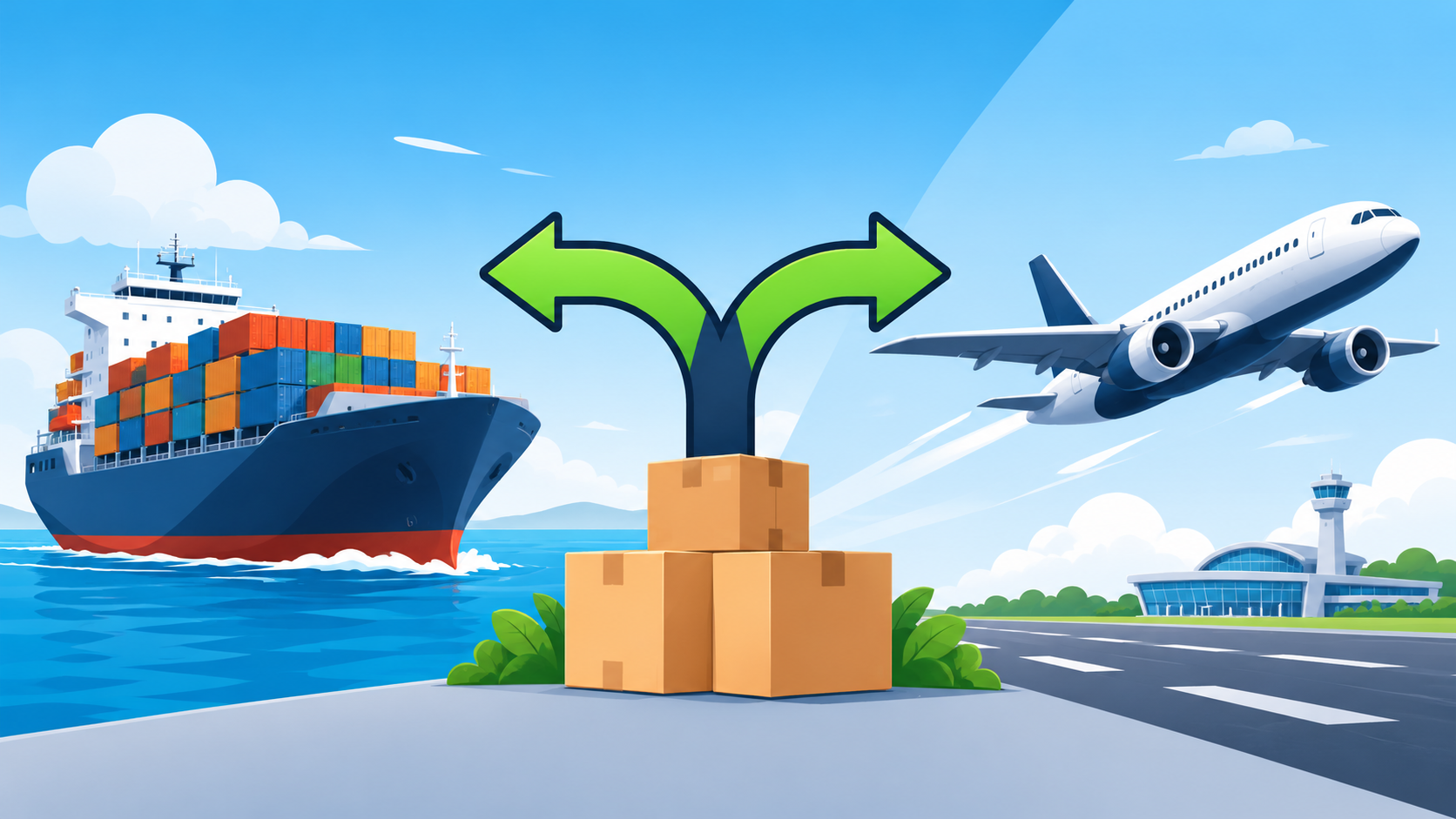
Sea freight and air freight side by side
| Sea freight | Air freight | |
|---|---|---|
| Cost per kilogram | Lowest for anything above about a cubic metre | High |
| Speed | Slowest, often weeks | Fastest, days to a couple of weeks |
| Best for | Large, heavy goods and repeat stock | Small, light, valuable or urgent goods |
| Watch out for | Storage charges at the port after the free period | Cost climbing quickly as volume grows |
When sea freight makes sense
- Large or heavy goods, where air freight would cost more than the goods are worth.
- Regular stock that you can plan weeks ahead.
- Shipments large enough to fill a container, or a shared container (often called LCL) for smaller loads.
When air freight makes sense
- Small, light and valuable goods, such as phone accessories or electronics.
- Urgent orders, or a first test order where speed matters more than cost.
- Goods that spoil or go out of fashion quickly.
A first small trial order might reasonably travel by air or courier despite the higher cost, simply to get market feedback faster. A repeat bulk order almost always belongs on the sea.
How to decide between sea freight and air freight
Work out the shipping cost per unit for both options, using the landed cost method. A product that is cheap per kilogram of shipping can still be a better import than one that is cheap to buy.
Add time for customs clearing and delivery in both cases, and ask your forwarder for current transit estimates. Build a buffer for peak shipping seasons, when both cost and delay risk rise.
Sea shipments arrive at a port, where storage charges start running after a free period. Line up your clearing agent, your payment and your transport before the vessel arrives, not after.
Frequently asked questions
Is sea freight always cheaper than air freight?
Per unit of weight or volume, usually yes for larger loads. For very small or very light loads the difference can be small, so compare the cost per unit for your own product.
How long does shipping take by sea or by air?
Sea freight usually takes weeks and air freight usually takes days to a couple of weeks. Ask your freight forwarder for a current estimate for your route, and add time for clearing customs.
Can I ship a small first order by air to test a product?
Yes. A small trial order by air or courier costs more per unit but gets you market feedback faster. Once a product proves itself, move repeat orders to sea freight.
From Module 10: Shipping and Logistics
Work out your real cost
Add up goods, shipping, duty and local costs and see what an import really costs you per unit.
Open the calculatorYour next step
Written by the Sabbi team
Based on the Sabbi Importation course. This is general guidance, not legal or customs advice. Confirm rates and rules with a licensed clearing agent.
Found this useful? Send it to a trader who is just starting out.
Share on WhatsAppSources and further reading
- FIATA: International Federation of Freight Forwarders Associations
The global body for freight forwarders, with background on how forwarding works.
- International Chamber of Commerce: Incoterms rules
The organisation that publishes and updates the Incoterms rules.
External links open in a new tab. Sabbi is not responsible for their content.