
5 min read · Updated 2026-11-05
What is landed cost? How to calculate it for imports
Landed cost is the total you pay to get a product from the supplier to your shop. Many first-time importers price their goods from the supplier's price alone, then find their profit has disappeared.
Quick answer
- Landed cost = goods + shipping + insurance + customs duty and taxes + port charges + agent fees + transport to your shop.
- Divide the total by the number of units. That figure, not the supplier's price, is what you compare with your selling price.
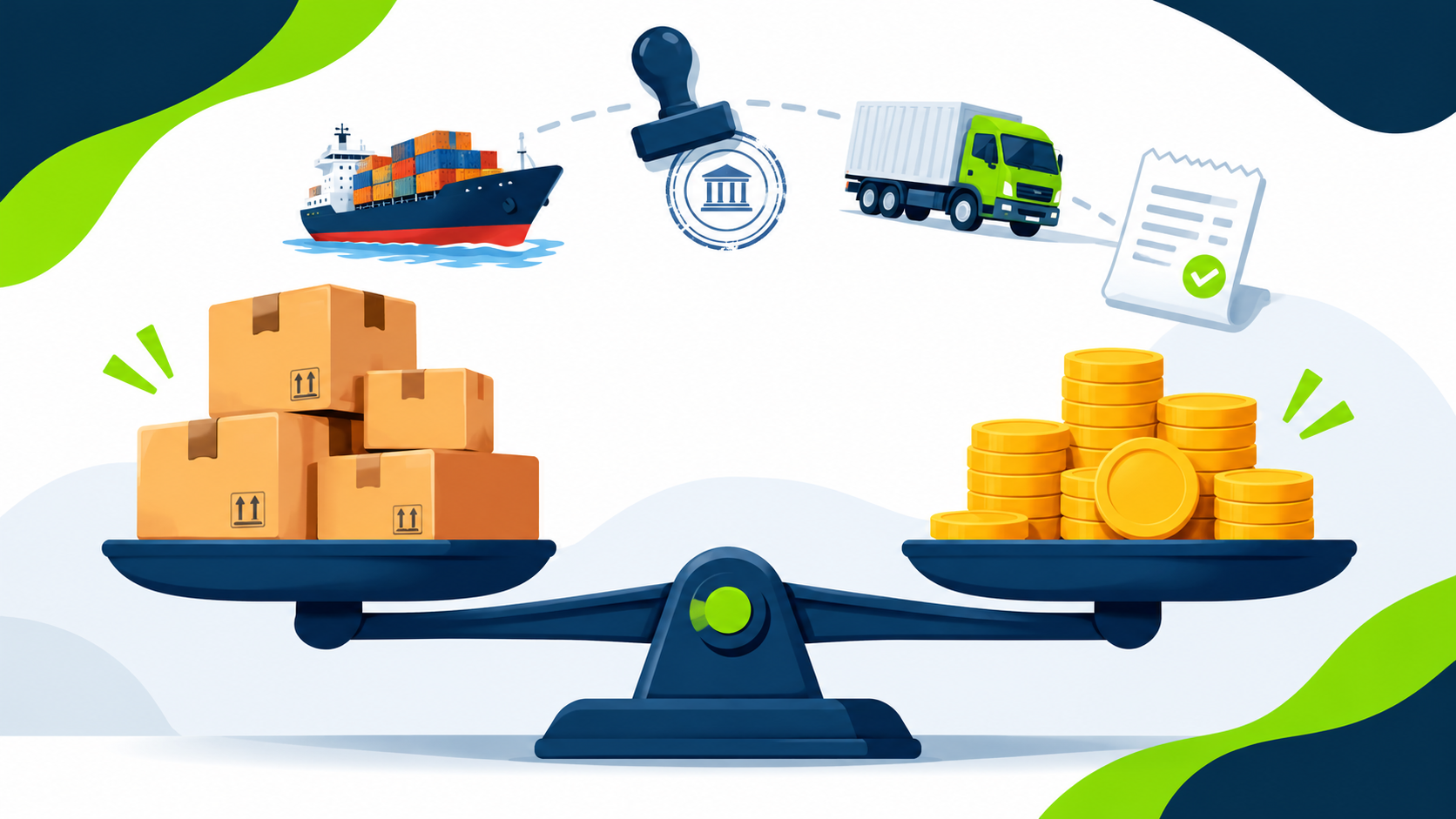
What goes into landed cost
- The cost of the goods, converted into XAF at the rate you actually pay.
- International shipping, by sea or by air.
- Cargo insurance.
- Customs duty and taxes, worked out on the customs value of your goods.
- Port, terminal and storage charges.
- The fees of your clearing agent.
- Transport from the port to your shop.
Assuming a shipment only carries "duty" is the most common landed-cost mistake. A typical shipment can also carry value-added tax, inspection or conformity fees, and administrative fees. Not every charge applies to every product, so ask your clearing agent which ones apply to yours.
How to work it out
- 1
Add goods, shipping and insurance
That gives you the value customs usually starts from.
- 2
Add duty and taxes
Duty is a percentage of that value. Taxes such as VAT are usually worked out on the value plus the duty, not on the invoice price alone.
- 3
Add the local costs
Port and terminal charges, your agent's fees and the delivery to your shop.
- 4
Divide by the number of units
The result is your true cost per unit.
A simple example
This example uses round numbers to show the idea only. Real duty rates depend on the product code, so check them with a licensed clearing agent.
| Line | Amount |
|---|---|
| Goods | 500,000 XAF |
| Shipping | 150,000 XAF |
| Insurance | 10,000 XAF |
| Duty and taxes (example) | 200,000 XAF |
| Port, agent and transport (example) | 90,000 XAF |
| Landed cost for 100 units | 950,000 XAF |
| Landed cost per unit | 9,500 XAF |
The supplier's price was 5,000 XAF per unit. The real cost is 9,500 XAF. Price your goods from the second number.
Protect your margin
- Keep a buffer for exchange-rate changes between your order and your payment.
- Ask your clearing agent for a written estimate before the goods ship.
- Recalculate for every new product, because duty and shipping change with the product.
- Plan clearance to happen quickly. Storage and container charges run by the day, so a delay costs money.
Frequently asked questions
What is the difference between landed cost and the supplier's price?
The supplier's price covers only the goods. Landed cost adds everything else it takes to get them to your shop: shipping, insurance, duty, taxes, port charges, agent fees and local transport.
How do I estimate customs duty before I order?
Find the product's customs code, then ask a licensed clearing agent for the duty and tax rates that apply. Use their written estimate in your landed cost, and include a buffer.
Should I price my products from landed cost or factory price?
Always from landed cost. Pricing from the factory price is how new importers discover, after the first shipment, that duties, shipping and clearance fees have eaten their margin.
From Module 7: Duties, Taxes and Landed Cost
Work out your real cost
Add up goods, shipping, duty and local costs and see what an import really costs you per unit.
Open the calculatorYour next step
Written by the Sabbi team
Based on the Sabbi Importation course. This is general guidance, not legal or customs advice. Confirm rates and rules with a licensed clearing agent.
Found this useful? Send it to a trader who is just starting out.
Share on WhatsAppSources and further reading
- Cameroon Customs (Direction Générale des Douanes)
Official customs information for Cameroon. Confirm current rules here or with a licensed clearing agent.
External links open in a new tab. Sabbi is not responsible for their content.